
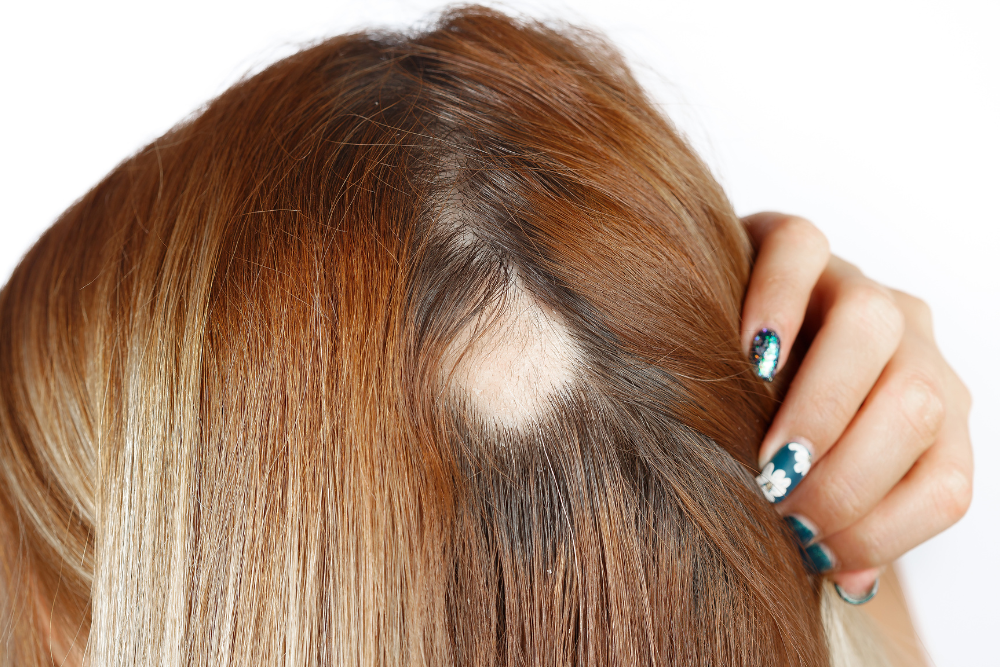
While mild cases of alopecia areata might resolve on their own, some scenarios demand the attention of an expert. In this guide, we’ll explore key signs for when to consult an alopecia areata specialist in Potomac, MD.
Read on to learn how a reputable practitioner can make an accurate alopecia areata diagnosis and create personalized treatment options to help you regain control and confidence.
What Is Alopecia Areata?
Alopecia areata is an autoimmune disorder that causes patches of hair loss on the scalp and other areas of the body. This condition occurs when the immune system mistakenly attacks healthy hair follicles, causing them to become smaller and stop producing hair.
Furthermore, it can occur at any age and affects both men and women.
While the exact cause of alopecia areata is unknown, genetics, environmental factors, and certain medical conditions may contribute to its development.
It’s also important to note that alopecia areata can range from mild patchy hair loss to complete baldness. More significant symptoms may lead to emotional distress and impact a person’s quality of life.
Therefore, seeking help from an alopecia areata specialist in Potomac, MD is crucial to effectively managing this condition.
Key Signs to Seek an Alopecia Areata Specialist in Potomac, MD
If you’re noticing signs that go beyond typical hair shedding, it’s time to take action. Here are key symptoms that should prompt you to consult a professional:
- Sudden or patchy hair loss on the scalp, eyebrows, or beard.
- Changes in nail appearance, such as pitting or the development of ridges.
- Hair loss accompanied by itching, burning, or pain.
- Ineffectiveness of over-the-counter treatments after a reasonable period.
- Hair thinning or loss stemming from tight hairstyles.
Fortunately, timely intervention can significantly improve the effectiveness of treatment and help address any underlying medical conditions associated with alopecia areata.
Why Choose a Top-Rated Specialist?
A leading alopecia areata specialist in Potomac, MD doesn’t just examine your visible symptoms. They’ll take a deeper look into potential triggers, like stress, autoimmune conditions, or environmental factors.
During your visit, they use tools like dermatoscopes to magnify the scalp and other affected areas for a closer look. Likewise, they may recommend additional tests such as biopsies or blood work to confirm the diagnosis.
Ultimately, this comprehensive approach ensures that you receive a tailored treatment plan designed specifically for your condition and symptoms.
Schedule an Alopecia Areata Consultation Today!
Are you experiencing symptoms of alopecia areata? If so, please call our office to schedule a consultation with one of our highly skilled and experienced specialists.